Dr. Gymbro
←

#ergogenic aids

25 articles
supplements

Woda wodorowa przyspieszyła elitarnych pływaków o 0,6 % – oto haczyk

BY DR. GYMBRO ·

Szklanka wody nasyconej wodorem sprawiła, że krajowi pływacy na płetwach byli o 0,6 % szybsi na dystansie 400 m w podwójnym ślepym badaniu typu crossover. Brzmi to niewiele, ale na najwyższym poziomie może decydować o podium. Ten sam protokół nie wpłynął na powtarzające się sprinty 50 m, poziom mleczanu we krwi, odczuwany wysiłek ani stres oksydacyjny, pozostawiając mechanizm niejasnym. Poniżej znajdziesz dokładną dawkę, kto może z tego skorzystać i dlaczego należy podchodzić ostrożnie do tego niewielkiego badania z 12 sportowcami.

science research

Kofeinowy zastrzyk w sprincie utrzymywał się 3,5 godziny — i sprinty były mniej bolesne

BY DR. GYMBRO ·

Jedna duża dawka kofeiny może nie zanikać po pierwszym zestawie. W nowym badaniu Uniwersytetu Tsukuba, 5,5 mg/kg przyjęte około godzinę przed treningiem utrzymywało zwiększoną moc przy powtarzalnych sprintach nawet do 3,5 godziny. Sprinty były odczuwane jako mniej bolesne i mniej męczące. Zyski były skromne (0,5‑3,7 %) i oparte na jedynie dwunastu osobach. Towarzyszyło im wyższe tętno i niższa prędkość przepływu krwi w mózgu, więc oto jak wygląda ta dawka i komu może pomóc.

nutrition

Kofeina przyspieszyła piłkarzy, ale nie poprawiła ich reakcji

BY DR. GYMBRO ·

Wszyscy zakładają, że kofeina podnosi ogólną sprawność sportowców, ale podwójnie zaślepione badanie na amatorskich piłkarzach pokazuje bardziej zniuansowany obraz. Dawka 300 mg (ok. 3,7 mg/kg) poprawiła zaplanowaną zwinność i wysokość skoku, natomiast przy reakcjach na światło lub na przeciwnika ludzkiego korzyści były niewielkie lub nieistotne statystycznie. W artykule omawiamy wyniki badania, ich interpretację i to, kto może z nich rzeczywiście skorzystać.

A lone trail runner pauses on a high alpine ridge at dawn, holding a small enamel camp mug of steaming coffee, with thin ribbons of steam curling into crisp, cold air. She wears a fitted charcoal running vest and a muted sage windbreaker, and her breath is faintly visible. Behind her, layered mountain ranges fade into soft blue and lavender haze, and a sea of low clouds fills the valley below. Warm golden sunlight skims the ridgeline and rim-lights her profile, shoulders, and the rising steam. In the foreground, a scattering of dried alpine grasses and lichen-covered stones is in sharp focus, with a worn trail snaking toward the summit. Near the mug sits a small pair of trail running shoes with dusty soles and a simple analog wristwatch resting on a flat rock.

The composition follows a wide 16:9 editorial layout. The subject sits slightly right of center on the rule of thirds, leaving generous negative space in the pale peach-and-powder-blue sky on the left, where headline text could sit. The palette is restrained and modern: warm amber, soft cream, dusty sage, slate blue, and a touch of terracotta. The look is cinematic but natural, with shallow depth of field on the foreground details, gentle film grain, and a slightly matte finish. It evokes a high-end outdoor lifestyle magazine or a contemporary wellness journal. The mood is calm, focused, and quietly determined, capturing the contrast between thin, cold altitude air and the warmth of a coffee ritual. The image has no text, logos, or futuristic elements, and no gym equipment, only natural light, texture, and atmosphere.
nutrition

Kofeina w cienkim powietrzu: Wzrost wydolności, którego hipoksja nie zniweczy

BY DR. GYMBRO ·

Cienka wysokość drastycznie obniża wydolność, ale nowa metaanaliza sugeruje, że kawa może nieco to zredukować. Analiza obejmuje dziewięć randomizowanych badań z placebo i łącznie 117 uczestników, wśród których jedynie 19 to kobiety. Badacze wykazali umiarkowanie‑do‑silny wzrost wydajności w warunkach hipoksji (g = 0.76). Niespodziewanie nasycenie tlenem i odczuwany wysiłek nie uległy zmianie, natomiast tętno, mleczan i wentylacja wzrosły. Dowody mają niską pewność, więc wyniki są obiecujące, ale nie dowodzone.
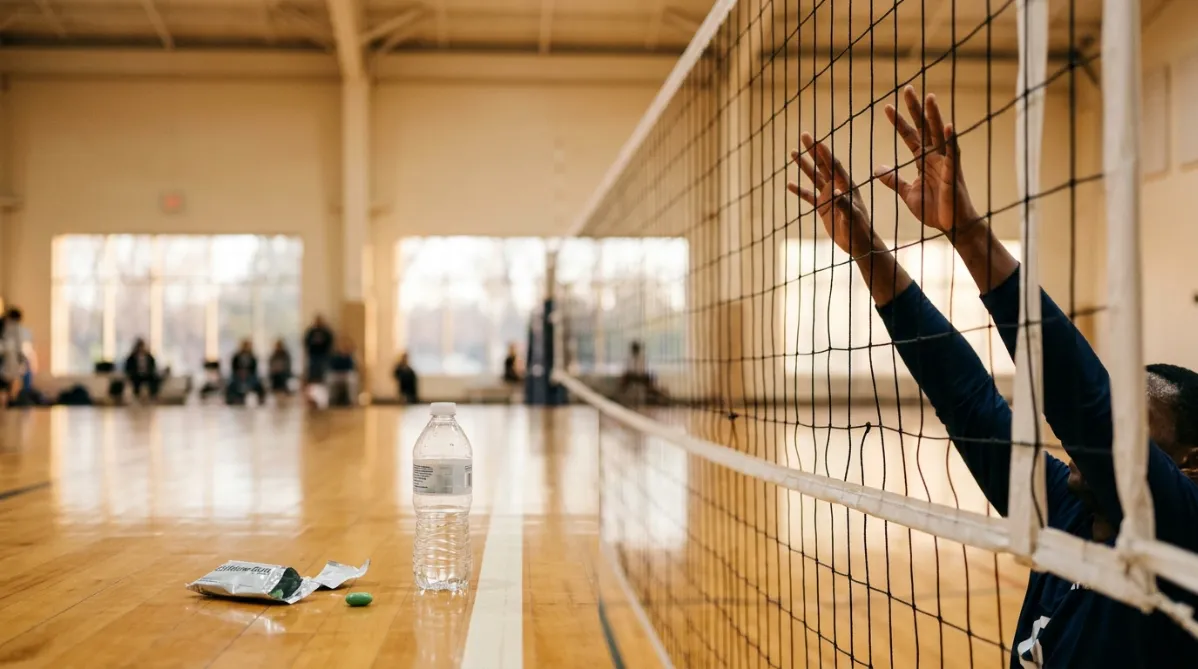
A landscape editorial photograph of a volleyball net in a softly lit indoor gym, shot from a low angle on the court. In the foreground, a pair of athletic hands in mid-block reach above the net, fingers spread, caught in crisp focus. The athlete's face is out of frame, so the attention stays on the hands and the net. In the lower left foreground, a small open foil pack of caffeine chewing gum sits on the polished maple floor, with two mint-green gum pieces beside it and a clear water bottle. The pack is unbranded and minimal.

The background is a warm blur of honey-toned hardwood, pale gym walls, and tall windows with diffused late-afternoon light streaming in. Dust motes glow in the light shafts. The palette is muted and modern: warm wood amber, soft cream, sage green, and a touch of deep navy from the athlete's jersey. Shallow depth of field and gentle film grain give the image a refined, magazine-like feel. The composition follows the rule of thirds, with the hands and net on the right and open negative space on the left, where headline text could sit.

The mood is calm, focused, and slightly cinematic, like a feature in a contemporary sports science journal. The lighting is soft and natural, with long gentle shadows across the court lines. No futuristic or digital elements, no charts, no text. The overall look is clean, tactile, and editorial.
nutrition

Zmęczenie spowalnia reakcje o 18 % – guma z kofeiną ogranicza spadek do 3 %

BY DR. GYMBRO ·

Po intensywnym protokole zmęczeniowym polegającym na powtarzalnym blokowaniu, elitarne siatkarki przy placebo spowolniły o 18,4 % w reaktywnej sekwencji blokowania. Guma z kofeiną w dawce 6 mg/kg ograniczyła spowolnienie do zaledwie 3,0 %, a dawka 3 mg/kg dała 6,4 %. Siła przy skoku blokującym oraz sztywność przy skoku z opuszczenia również utrzymały się lepiej przy kofeinie. Badanie obejmowało jedynie 15 zawodniczek, maskowanie nie było pełne, a skutki uboczne były częstsze przy wyższej dawce, więc nie wyznaczono jednej optymalnej dawki. Poniżej wyjaśniamy, co oznaczają podane liczby w rzeczywistych miligramach i kto może na tym skorzystać.
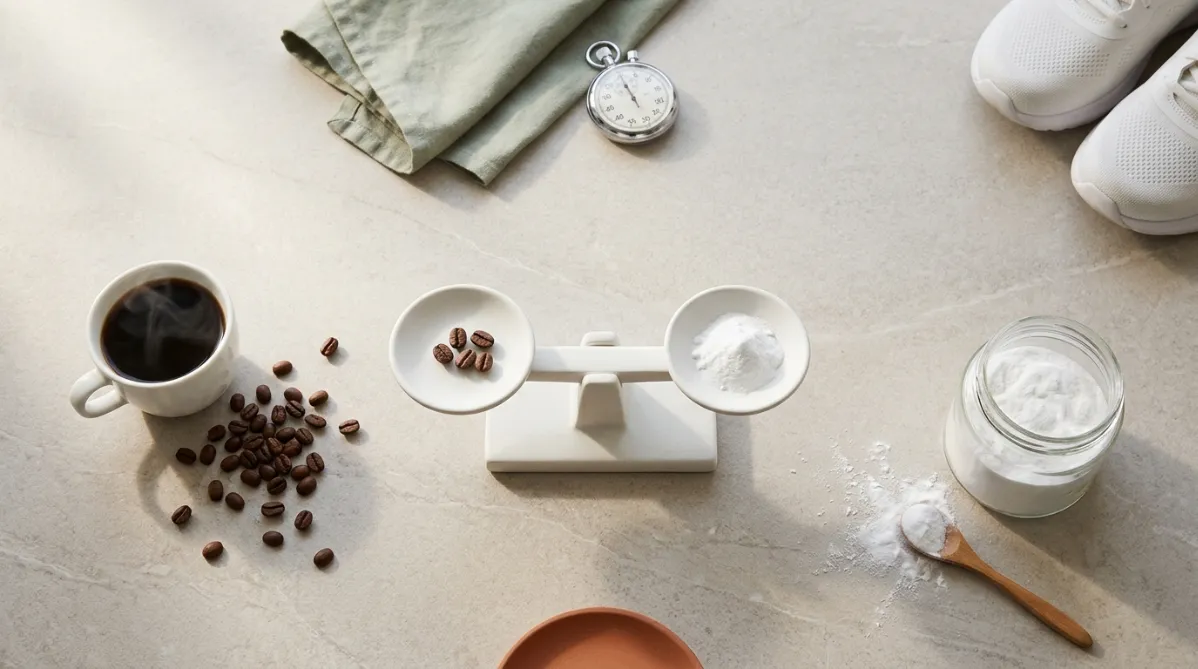
A calm, editorial-style flat lay photographed from above on a pale, warm-gray stone countertop in soft morning window light. On the left, a small white ceramic cup of black coffee with a delicate swirl of steam, beside a scattering of whole roasted coffee beans. On the right, a minimalist glass jar of fine white baking soda powder with a wooden spoon resting beside it, a few soft white grains dusted across the surface. In the center, a clean white scale-like balance made of matte ceramic with two small dishes: one holding a few coffee beans, the other a small mound of white powder, perfectly level to suggest the idea of equal outcomes. A folded sage-green linen napkin and a simple stainless steel stopwatch rest near the top edge, along with a pair of minimalist white running shoes partially visible in the corner. Subtle long shadows, gentle natural highlights, and a shallow depth of field give a tactile, premium feel. The color palette is muted and modern: cream, warm espresso brown, soft sage, and chalky white, with a single accent of pale terracotta in a small ceramic dish. Composition is balanced and uncluttered with generous negative space on the upper right for a title overlay. The overall mood is clean, contemporary, and quietly scientific, like a cover from a trendy health and performance journal. Wide landscape 16:9 framing, crisp detail, natural film-like grain.
nutrition

Stos kofeiny i wodorowęglanu sodu – czy lepszy niż każdy z osobna?

BY DR. GYMBRO ·

Łączenie dwóch sprawdzonych środków ergogenicznych brzmi jak pewny sukces, ale nowa meta‑analiza 13 badań przekrojowych pokazuje, że matematyka nie jest tak prosta. W porównaniu z placebo kofeina + wodorowęglan sodu zwiększyły średnią moc o ok. 8,4 W i skróciły czas testu o ok. 1,6 %. Wyniki te znikają po wykluczeniu poszczególnych badań, a kombinacja nie przewyższyła ani samej kofeiny, ani samego wodorowęglanu. Poniżej znajdziesz, co mówią dane, typowe dawki i dla kogo warto rozważyć ten zestaw.
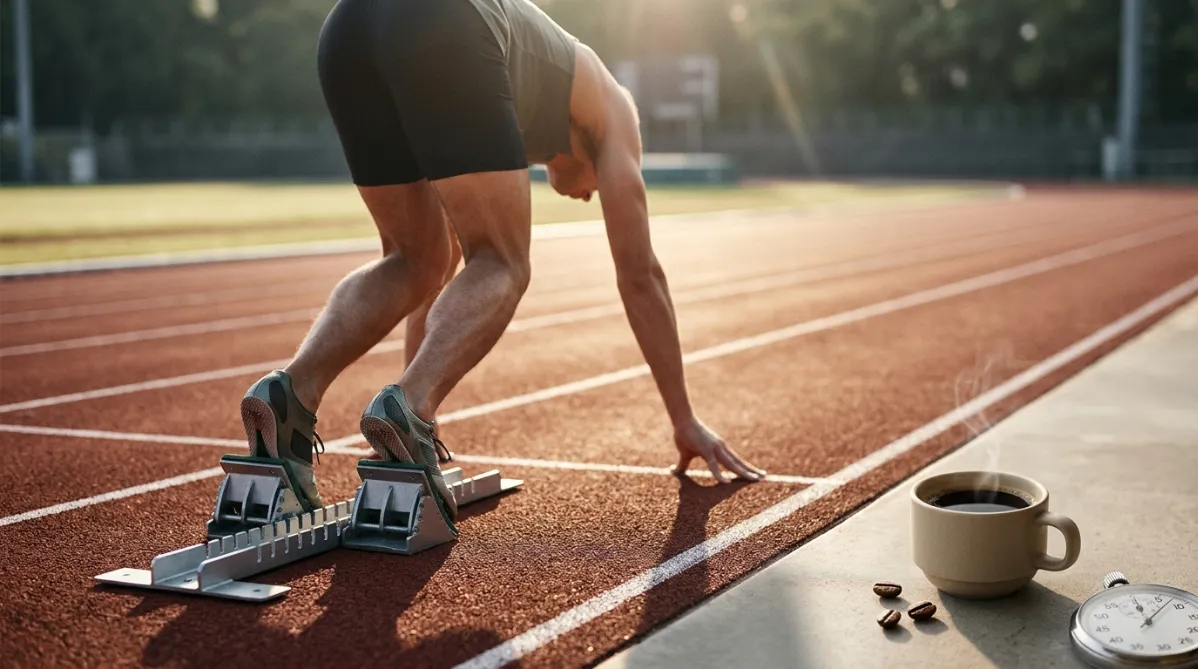
A wide, editorial-style photograph of a sprinter crouched in starting blocks on a deep terracotta-red running track, shot from a low angle at the side as the first morning light rakes across the lanes. The athlete is mid-set, hips lifted, hands poised behind crisp white lane lines, with a soft focus on their muscular calves and spiked shoes in the foreground. Warm golden sunlight creates long, elegant shadows and subtle lens flare, while the distant lanes fade into a creamy bokeh.

In the lower right foreground, slightly out of focus, sits a minimalist still life on a matte concrete ledge beside the track: a small ceramic cup of black coffee with a thin wisp of steam, two loose roasted coffee beans, and a simple stopwatch with a clean white face. The ceramic is a muted sand color, adding a refined, modern lifestyle touch.

The color palette is restrained and trendy: terracotta, warm cream, soft charcoal, and a hint of sage green from trees blurred in the far background. The composition uses generous negative space across the upper left, ideal for headline text overlay. The look is similar to a contemporary health and sports science magazine: natural film-like grain, gentle contrast, shallow depth of field, and a calm, focused mood. No text, no logos, no graphics, and no futuristic elements, just a realistic, tactile, sunlit scene that suggests precision, preparation, and explosive speed.
science research

Podwójna dawka kofeiny, szybsze sprinty? Co naprawdę przyniosło 6 mg/kg

BY DR. GYMBRO ·

Nowe randomizowane, podwójnie zaślepione badanie porównało 3 mg/kg i 6 mg/kg kofeiny u 21 wytrenowanych sprinterów. Obie dawki przewyższyły placebo, a wyższa dawka dała dodatkowy przyrost prędkości jedynie na pierwszych 30 i 60 m, nie przy 10 m. Poprawiła także wysokość skoku i siłę rozwoju w bloku startowym, ale nie wpłynęła na czas reakcji ani szczytową moc w teście Wingate. Artykuł podaje, ile to miligramów dla sportowca ważącego 70‑80 kg, kiedy przyjmować, do kogo wyniki się odnoszą i czego nie wiadomo o skutkach ubocznych.

A landscape editorial photograph in a bright, modern gym studio with soft natural light pouring through tall windows. In the foreground, a matte ceramic cup and a small glass jar of plain white powder sit on a light oak bench, with a wooden scoop resting beside them and a few loose grains dusted across the wood. The jar has no label, which hints at mystery without being heavy-handed. Slightly out of focus behind them, a female athlete in a sage green athletic set stands at a barbell, chalked hands gripping the bar, her expression calm and focused. A male cyclist on a stationary bike is blurred in the far background. The palette is warm neutrals: cream, soft sand, pale oak, muted sage, and a touch of terracotta, with gentle golden-hour highlights and soft shadows. The composition follows the rule of thirds, with the cup and jar in the lower left, the athlete on the right, and open negative space in the upper area for headline text. The depth of field is shallow, with a creamy bokeh background. The mood is contemplative, curious, and trendy, like a contemporary health and science magazine cover. Fine film grain, subtle matte finish, clean minimalist styling, and no text or logos.
science research

Fałszywa kofeina nadal sprawia, że sportowcy są silniejsi i szybsi

BY DR. GYMBRO ·

Co jeśli część twojego przedtreningowego kopniaka pochodzi z głowy, a nie z łyżeczki? Metaanaliza z 2026 roku obejmująca 17 badań wykazała, że placebo, które sportowcy uznali za kofeinę, nadal poprawiało wyniki sportowe (d = 0,49) w testach wyciskania, jazdy na rowerze na czas i powtarzalnych sprintów. Efekty były większe, gdy badacze byli zaślepieni oraz w badaniach z większą liczbą kobiet, choć dowody są niskiej pewności i obarczone dużym ryzykiem biasu. To nie jest powód, by rezygnować z prawdziwej kofeiny w dawce 3‑6 mg/kg, ale przypomina, że oczekiwania są zmienną wpływającą na wydajność. Oto, co mówią dane i kto powinien zachować ostrożność.
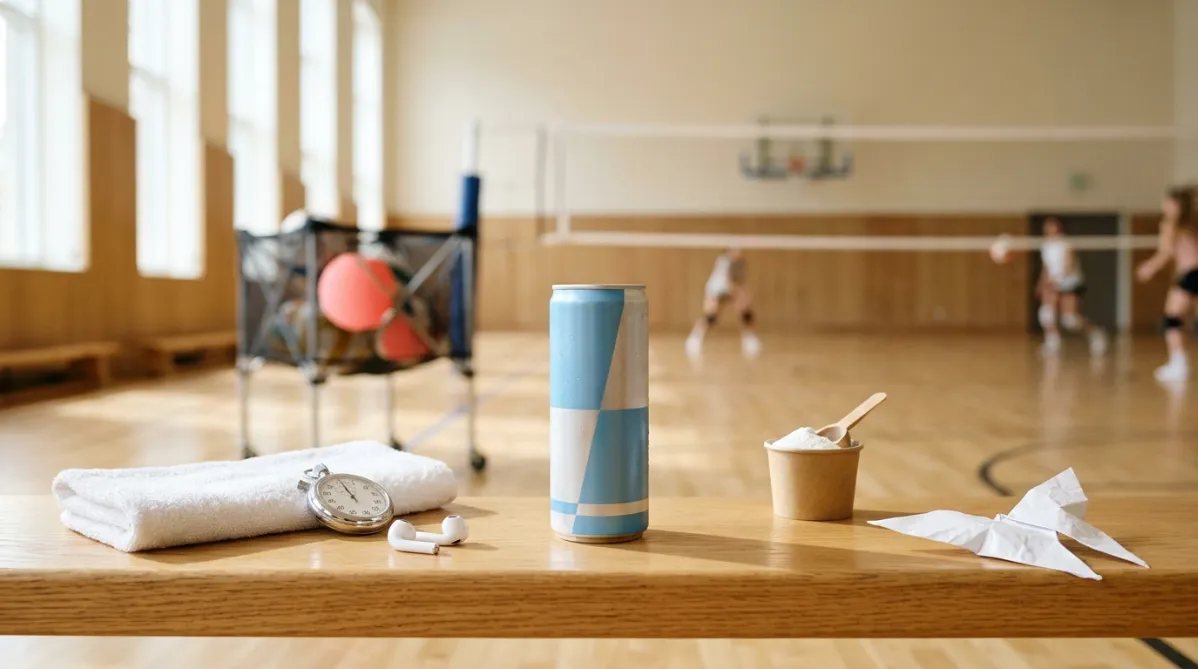
A wide, editorial-style photograph of a single slim silver and blue energy drink can standing upright at center on a polished light-oak gym bench, shot in soft natural window light. The can is unbranded, with a clean, minimal design and a few beads of condensation. Behind it, the softly blurred interior of a bright modern indoor volleyball court stretches into the background, with a pale hardwood floor, a net, and a few volleyballs resting in a mesh cart. Warm morning sunlight enters through tall windows on the left and casts long, gentle shadows across the bench. Beside the can sit a small white towel folded neatly, a simple stopwatch, and a pair of white wireless earbuds. On the right, a small paper cup of white powder and a wooden scoop hint at measured dosing. They are placed deliberately, like a styled still life.

At the very edge of the frame, a pair of delicate white paper wings, origami-like and slightly crumpled, lie flat and unused on the bench, a subtle visual joke about the "wings" slogan. The wings are understated and tactile, not magical or glowing.

The color palette is muted and fresh: warm honey wood, soft cream, pale sky blue, and touches of silver, with a single accent of coral red from a volleyball panel in the background. The depth of field is shallow, with crisp focus on the can and the paper wings and a creamy bokeh background. The composition follows the rule of thirds, with the can slightly left of center and generous negative space on the right for a headline overlay. The mood is calm, clean, and contemporary, like a lifestyle and science magazine cover, with fine film grain and natural contrast. The camera angle is slightly low, at bench level, with a 50mm lens look.
nutrition

Czy Red Bull daje skrzydła? 13 testów w siłowni nie wykazało efektu

BY DR. GYMBRO ·

Slogan Red Bulla obiecuje skrzydła, ale nowy test typu crossover z udziałem kobiet‑siatkarzy nie wykazał ich działania. Jedna standardowa puszka nie poprawiła żadnego z 13 parametrów testów Wingate, skoku i chwytu w porównaniu z placebo. Ośmiu z 15 sportowców zgłosiło łagodne nudności. Prawdopodobną przyczyną jest niska dawka kofeiny – około 1,1 mg/kg, znacznie poniżej powszechnie zalecanego zakresu 3‑6 mg/kg. Poniżej znajdziesz, co wykazało badanie, jego ograniczenia oraz jak prawidłowo dawkować kofeinę.
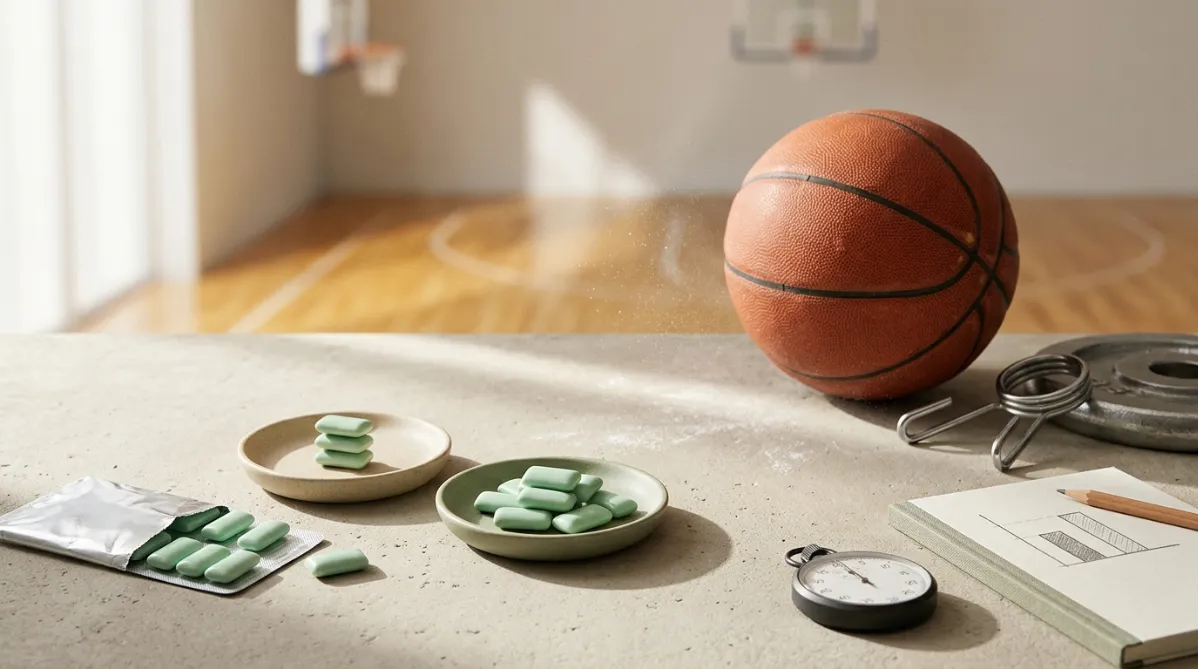
A landscape editorial still life on a pale warm-gray concrete surface, shot from a slightly elevated three-quarter angle in soft diffused morning window light. In the foreground left, a small open foil blister pack of mint-green caffeine gum sits beside two neatly arranged piles of gum pieces, one with three pieces and one with six, each on a small matte ceramic dish in oat and sage tones. The pieces are slightly glossy, rounded rectangles with crisp shadows. In the center-right, a worn leather basketball rests on the surface with deep amber-orange tones and visible pebbled texture. Next to it is a loosely chalked barbell collar and a single steel weight plate edge, partly out of focus. A minimalist analog stopwatch with a matte white face and a thin black hand lies at the lower right, and a slim notebook with a pencil rests nearby. The page shows a simple hand-drawn bar graph of two equal bars, with no legible text. In the soft-focus background, a blurred indoor basketball court with warm honey-colored hardwood and distant hoop lines fades into creamy bokeh. A narrow band of sunlight crosses the scene diagonally and picks out chalk dust particles in the air. The palette is muted and modern: sage green, warm oat, terracotta orange, charcoal, and cream. The composition leaves open negative space on the upper left for title overlay. Shallow depth of field, fine film grain, and a calm, clean magazine aesthetic like a contemporary health and science journal. No people, no text, no futuristic elements.
science research

Guma z kofeiną i wydajność tego samego dnia: dlaczego 3 mg/kg dorównało 6 mg/kg

BY DR. GYMBRO ·

W badaniu cross‑over przeprowadzonym wśród koszykarzy stwierdzono, że guma z kofeiną w dawce 3 mg/kg podnosi siłę, moc, prędkość sprintu i zwinność reaktywną tego samego dnia niemal tak samo jak podwójna dawka 6 mg/kg. Obie dawki zwiększyły także prędkość sztangi przy intensywnym rozgrzewaniu przysiadów. Po 24 i 48 godzinach efekt zanikał. Badanie nie obejmowało testu wyjściowego ani grupy jedynie z kofeiną, więc wyniki należy interpretować ostrożnie. Oto, co oznacza to dla dawkowania, momentu przyjęcia i potencjalnych odbiorców.
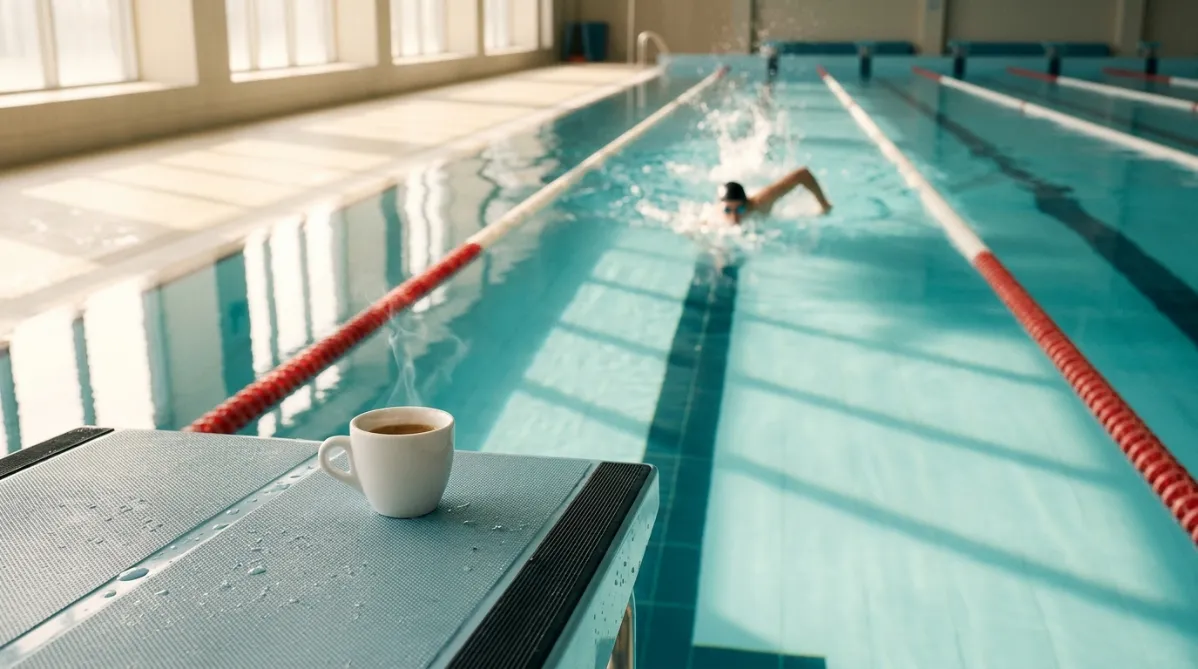
A wide, editorial-style photograph of a competition swimming pool lane seen from just above the water line at the starting end, in soft morning light. In the foreground, on the pool deck, a white ceramic espresso cup sits on the edge of a blue-gray starting block, a thin curl of steam rising from it. The cup is in crisp focus, with a few droplets of water on the textured non-slip deck around it. Behind it, the pool stretches into the distance as a series of calm lanes divided by red and white lane ropes. The turquoise water glints with gentle ripples and long, shimmering reflections. At the far end, a lone swimmer in a dark cap and goggles is mid-stroke, caught in a small burst of white splash, and slightly out of focus because of the shallow depth of field.

Large windows along the side wall let in pale golden sunlight, which throws soft diagonal light across the water and the deck. The palette is clean and modern: aqua, deep teal, warm cream and a small accent of coffee brown. The cup's warm tones stand out against the cool blues. The composition follows the rule of thirds, with the cup in the lower left third and open negative space of water and light on the right, leaving room for headline text. The look is minimal, airy and contemporary, like a high-end sports and science magazine, with subtle film grain, natural color grading, and a slightly desaturated, calm mood. Faint stopwatch-like details appear only as a thin black timing pad edge on the starting block, with no text or numbers visible. The overall feel is quiet anticipation just before a race, precise and fresh, with a sense of small margins and measured performance.
nutrition

Kofeina przyspiesza pływaków, ale mniej niż się wydaje

BY DR. GYMBRO ·

Pływacy od lat sięgają po kawę przed zawodami, ale czy naprawdę przyspiesza ich to w wodzie? Metaanaliza 13 badań typu cross‑over szacuje zysk na około 1,7 % – przewagę, która w pływaniu rozstrzyga setne części sekundy. Największy efekt pojawia się przy dawce ≥ 6 mg/kg, natomiast niższe dawki nie wykazują wyraźnego działania. Kofeina podnosi także poziom mleczanu po wyścigu, a wyniki różnią się znacznie między badaniami. Oto, co mówią dowody i co wciąż pozostaje niejasne.
A wide landscape editorial photograph shot from slightly above, showing a clean matte stone countertop in soft morning light. On the left, a single frosted glass tumbler of pale pink-orange watermelon-colored drink sits with condensation beads on its surface, a thin slice of watermelon resting beside it. In the center, a minimalist matte white scoop rests on a small pile of fine white powder, with a few grains scattered naturally across the surface. Behind it, a blurred matte sage-green supplement tub with no legible text stands slightly out of focus. On the right, a neat arrangement of gym elements: a rolled linen towel, a slim stainless steel water bottle, and a pair of worn white running shoes with soft shadows. A small brass balance scale sits at the far right edge, one pan slightly higher than the other, hinting at weighing evidence versus hype. Scattered across the counter are a few cut watermelon rind wedges in vivid green and coral pink, adding natural color accents.

The color palette is warm and restrained: cream, soft blush pink, sage green, and warm gray, with a single pop of coral. Light enters from a window on the left, casting long, gentle diagonal shadows and a subtle highlight on the glass. Shallow depth of field with creamy bokeh in the background. Composition leaves generous negative space across the upper third and right side for headline text overlay. Style resembles a modern wellness magazine or trendy health journal cover: calm, tactile, minimal, slightly muted film-like grain, natural textures such as linen, stone, and glass. No people, no text, no logos, and no futuristic elements.
supplements

Citrulline Malate – hype czy pomoc? Co mówią 30 badań

BY DR. GYMBRO ·

Citrulline malate jest stałym składnikiem wielu mieszanek przedtreningowych, ale jak duża jest jego rzeczywista skuteczność? Najnowsza meta‑analiza trójpoziomowa, obejmująca 30 randomizowanych badań z udziałem 644 osób, wykazała jedynie niewielki ogólny wzrost wydajności (Hedges' g = 0,16). Przedziały predykcyjne były szerokie, pewność GRADE niska do bardzo niskiej, a subiektywne odczucie zmęczenia nie uległo zmianie. Jednorazowe dawkowanie wydawało się stabilniejsze niż chroniczne, pojawiły się sygnały dotyczące wytrzymałości aerobowej i krótkich zadań anaerobowych, jednak nie były one przekonujące. Oto, co to oznacza dla dawki, czasu przyjmowania i czy warto się tym przejmować.
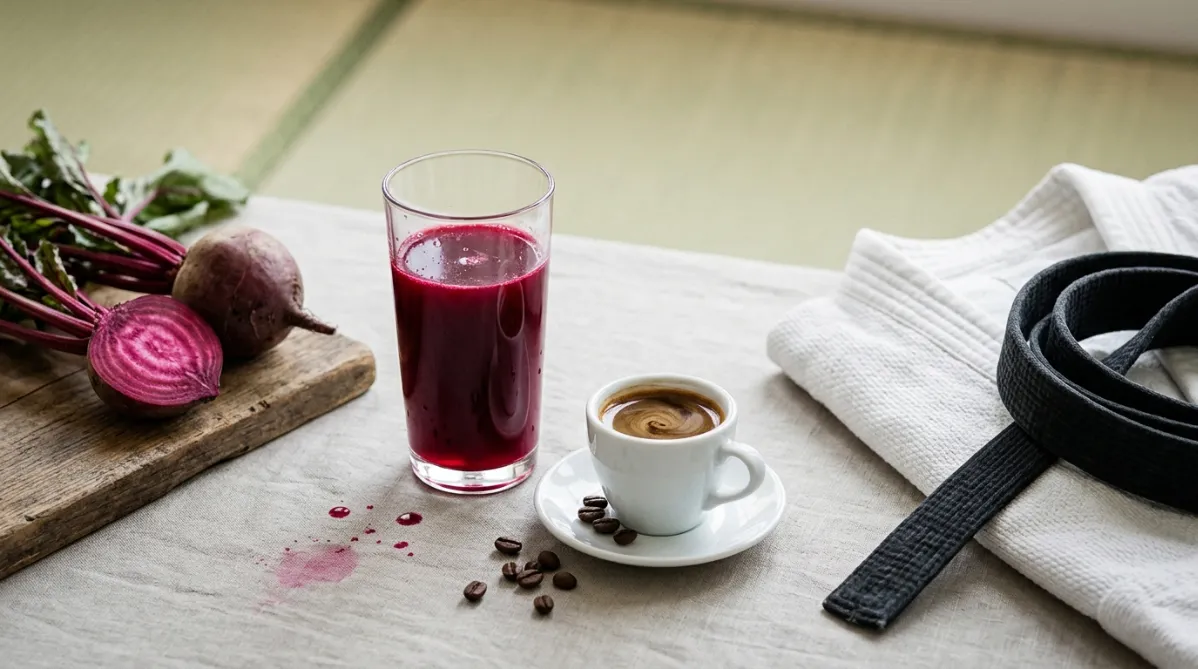
A wide landscape editorial still life on a pale warm-gray linen surface, shot from a slightly elevated three-quarter angle in soft diffused morning window light. At center-left, a tall clear glass filled with deep magenta-crimson beetroot juice catches the light, its edges glowing ruby with a few condensation droplets on the surface. Beside it sits a small white ceramic espresso cup with dark, glossy coffee and a delicate swirl of crema. A few roasted coffee beans are scattered casually near the cup's saucer. To the left, two whole raw beetroots with their leafy burgundy-veined greens still attached rest on a rustic wooden board, with one beet sliced in half to reveal concentric rings of vivid fuchsia and pale pink. A folded white judo gi sleeve with a worn black belt loosely coiled on top is draped along the right side of the frame, the cotton weave texture visible, hinting at the sport without any people. In the background, a soft-focus tatami mat texture in muted straw-green creates a subtle horizontal band, blurred into creamy bokeh. A small scattering of beet juice droplets and a faint magenta stain on the linen add an organic, lived-in touch. The palette is restrained and modern: magenta, espresso brown, off-white, muted sage, and warm beige. Composition leaves generous negative space on the upper right for headline overlay. The mood is clean, calm, and contemporary, like a premium health and science magazine cover, with shallow depth of field, crisp focus on the glass and cup, fine natural shadows, and subtle film-like grain.
nutrition

Sok z buraka i kofeina: sztuczka w judo, która przewyższyła samą kofeinę

BY DR. GYMBRO ·

Kofeina jest najczęściej wybieranym środkiem przed walką, ale nowy randomizowany test z udziałem 35 judoków sugeruje, że jej przewaga zanika już przy piątej walce w symulowanym dniu konkursu. Sok z buraka działał odwrotnie, przynosząc korzyści pod koniec dnia, a połączenie obu substancji zapewniało zarówno wczesną, jak i późną wydajność. W piątym teście zarówno sok z buraka, jak i ich kombinacja przewyższały samą kofeinę pod względem specyficznej kondycji judo, funkcji nerwowo‑mięśniowej i poznawczej. Oto, co odkryto w badaniu, komu może pomóc, kto powinien zachować ostrożność i czego nie mówi abstrakt.
A bright, airy editorial photograph in landscape format of a clean white marble kitchen counter in soft morning light. On the left, a small rustic ceramic bowl holds a mound of fine white powder, with a wooden spoon resting beside it and a scattering of powder dusted across the marble. Next to it sits a glass of water with a faint ripple on its surface. In the middle ground, a simple breakfast spread: a bowl of oatmeal topped with sliced banana, a piece of toast with honey, and a few slices of white bread, all styled in muted, natural tones. A minimalist analog wall clock or a vintage round kitchen timer in matte sage green sits subtly in the background, hinting at the 90-minute timing.

On the right side of the frame, slightly out of focus, a pair of modern running shoes in soft coral and cream rests on a light oak floor or bench. Next to them are a folded running shirt and a slim sports watch. Through a large window behind the counter, a blurred sunlit tree-lined running path glows in warm golden light, suggesting a woman's morning run without showing a face.

The palette is soft and modern: warm whites, sage green, pale peach, light wood, and touches of coral. Shallow depth of field, gentle natural shadows, and a clean composition with generous negative space in the upper left for title overlay. The mood is fresh, trustworthy, and health-journal chic, like a high-end wellness magazine feature. Shot on a 50mm lens, crisp details, subtle film grain, and a calm, minimal, contemporary feel.
nutrition

Soda oczyszczona skróciła 10‑kilometrowy bieg kobiet o 32 sekundy — jest haczyk

BY DR. GYMBRO ·

Tanie, domowe połączenie przyspieszyło czasy 10‑km u amatorskich biegaczek, a typowe problemy żołądkowe prawie nie wystąpiły. W podwójnie zaślepionym badaniu krzyżowym 21 kobiet pobiegło o ok. 32 sekundy szybciej po spożyciu wodorowęglanu sodu. Sztuczka polegała na połączeniu go z posiłkiem bogatym w węglowodany 90 minut przed startem. Oto dawkowanie, timing, kto może z tego skorzystać i kto powinien się wahać.
A wide, editorial-style flat lay photographed from above on a pale oat-colored linen surface in soft morning window light. On the left, a small matte white ceramic cup of black coffee with a delicate swirl of steam, beside a few scattered roasted coffee beans. On the right, a second matte sage-green ceramic cup holding a pale, creamy golden tea-like drink, mirroring the first. Between them, two small glass vials with cork stoppers sit side by side: one holding fine white powder, the other holding slightly warmer cream-colored powder, with a tiny brass measuring spoon resting nearby. In the lower foreground, a slim wooden rowing oar lies diagonally across the frame, its blade edge softly entering from the right, painted a muted navy with a thin terracotta stripe. A minimalist analog stopwatch with a brushed-steel case rests near the oar, and a folded cream notebook with a thin pencil suggests data-taking. In the upper corner, a crescent-shaped dried eucalyptus sprig and a small folded gray wool throw hint at sleep and calm without being literal. The palette is warm and restrained: oat, cream, sage, soft navy, terracotta, and espresso brown. Shadows are long and gentle, with shallow depth of field and subtle film grain, giving a refined, modern wellness-magazine feel. Generous negative space on the left third of the composition leaves room for a headline overlay. Clean, calm, tactile, and contemporary, with no text, logos, or futuristic elements.
science research

Paraksantyna kontra kofeina: zwycięska kombinacja i ratunek dla snu

BY DR. GYMBRO ·

Paraksantyna, główny metabolit kofeiny, zmierzyła się z kofeiną w badaniu 14 wioślarzy. Połączenie po 200 mg każdego związku przewyższyło placebo w teście na dystansie 2000 m, choć efekt był niewielki (d = 0,30). Samo spożycie któregokolwiek z tych składników nie przyniosło wyraźnej poprawy wydajności, ale paraksantyna okazała się łagodniejsza dla jakości snu. Oto wyniki, ich ograniczenia i grupa, która może z nich najwięcej skorzystać.
A wide editorial still life on a pale, warm-toned concrete surface in soft morning window light. In the center-left, a shallow matte ceramic bowl holds a small pile of bright red coffee cherries with glossy skins, a few sliced open to reveal pale mucilage and paired green-tan beans. Beside it, a small glass dish of fine, golden-brown powdered extract with a tiny wooden scoop resting on its edge. A sprig of coffee plant leaves, deep green and waxy, arcs across the foreground.

On the right side, slightly out of focus, a sleek road cyclist's handlebar and a matte black water bottle lean against a light plaster wall, suggesting athletic training without showing a person. A minimalist analog stopwatch with a clean white face and thin black hands sits in the mid-ground, angled toward the camera, its hands paused near the fifteen-minute mark. A folded linen cloth in oatmeal beige and a single small espresso cup with a thin crema ring add quiet texture.

The color palette is restrained and modern: cherry red, sage green, cream, soft terracotta, and charcoal accents. Light comes from the left, casting long, gentle shadows with a subtle warm glow and a hint of dust in the air. Shallow depth of field with crisp focus on the cherries and stopwatch, creamy bokeh in the background. Composition leaves open negative space in the upper right for a headline overlay. The overall feel is a clean, trendy health-and-science magazine cover: tactile, natural, minimal, and calm, shot in a 16:9 landscape frame with fine film-like grain and true-to-life tones.
nutrition

Ekstrakt z wiśni kawowej: 200 mg kofeiny zwiększyło wynik jazdy rowerowej o 4,6 %

BY DR. GYMBRO ·

Niska dawka 200 mg kofeiny pochodząca z ekstraktu całej wiśni kawowej pomogła wytrenowanym kolarzom wykonać o 4,6 % więcej pracy w 15‑minutowym wyścigu czasowym. Popularne przekonanie, że przyspiesza ona odbudowę glikogenu, nie zostało potwierdzone. Badanie randomizowane, podwójnie zaślepione, w układzie crossover, obejmowało zaledwie 12 kolarzy i było finansowane przez przemysł, przy braku grupy kontrolnej z czystą kofeiną. Oto, co pokazują wyniki, czego nie udowadniają i kto mógłby je wypróbować.
A sleek aluminum energy drink can and a matte scoop of white pre-workout powder sit side by side on a pale concrete gym bench, lit by soft morning window light. The can is slim and minimalist, with a muted sage green label and no legible text. Beside it is a clear glass shaker half full of cloudy, lightly frothy liquid with condensation beading on its surface. A few fine grains of powder are scattered across the bench, catching the light. Behind them, slightly out of focus, a stainless steel barbell rests on a rack, and a folded charcoal gym towel sits at the edge of the frame.

The color palette is warm neutral: oatmeal, soft gray, and sage, with a single accent of pale citrus yellow from a halved lemon wedge placed near the glass. A thin, elegant shadow from the window blinds falls diagonally across the scene, giving it an editorial, magazine-style rhythm. The composition leaves generous negative space on the right third of the frame, a smooth blurred wall in warm off-white, suitable for headline text overlay.

The shot is a low-angle, shallow depth-of-field product-style photograph, as if taken with an 85mm lens at f/2. The foreground objects are tack sharp and the background melts into creamy blur. The mood is calm, clean, and modern, like a wellness or science journal feature. Subtle film grain and gentle contrast add a tactile, contemporary lifestyle feel. There are no people, no logos, and no futuristic or sci-fi elements, just a quiet, considered still life that suggests the choice between a canned drink and a scooped supplement.
nutrition

Twój napój energetyczny może działać jak pre‑workout — z jednym haczykiem

BY DR. GYMBRO ·

Kofeina i tauryna są często łączone w napojach energetycznych i pre‑workoutach, ale czy naprawdę poprawiają wydolność? Metaanaliza 11 randomizowanych badań (234 uczestników) wykazała umiarkowane wzrosty maksymalnej mocy i czasu do wyczerpania oraz niższe odczucie trudności, natomiast tętno i czas reakcji nie uległy istotnym zmianom.
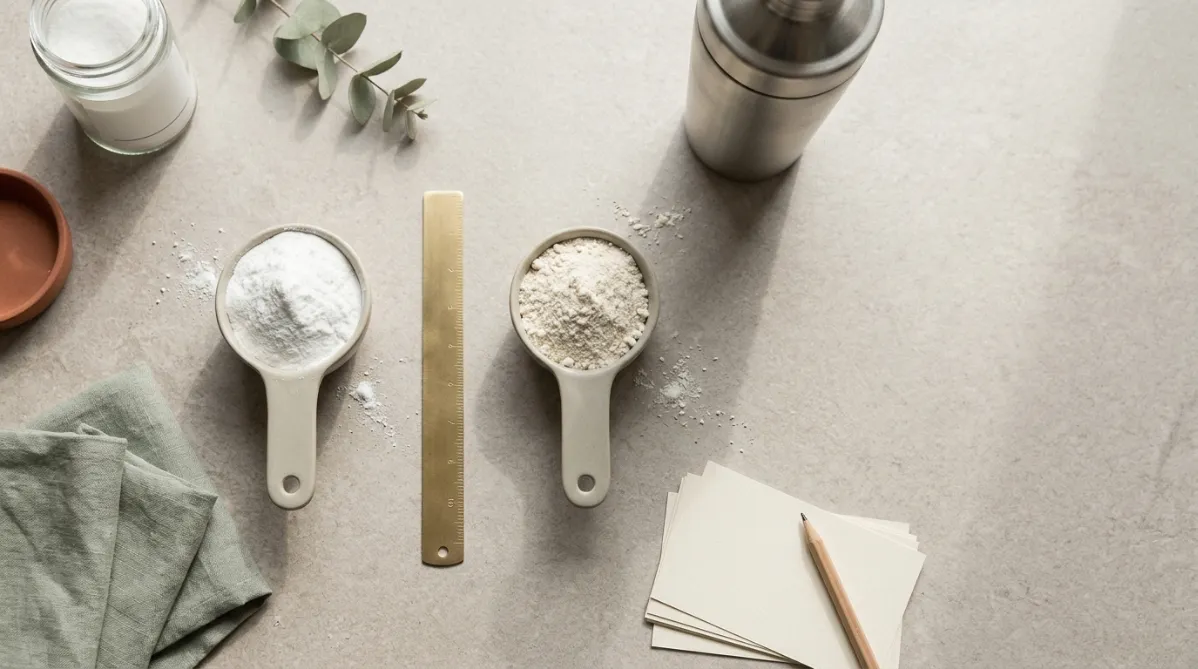
A bright, minimalist flat-lay photograph of two supplement scoops on a pale warm-gray stone surface, shot from directly above in soft natural window light. On the left, a matte ceramic scoop holds fine white creatine monohydrate powder, heaped in a clean mound. On the right, a second scoop of the same shape holds slightly coarser off-white beta-alanine powder, with a small, deliberate gap between the two. Each scoop sits in its own soft shadow, which suggests separation rather than combination. Between them, a thin brushed-brass ruler or a single slim line of fine powder runs across the surface and subtly divides the composition.

Around the scoops, a few restrained props in a muted editorial palette of sage green, cream, terracotta, and soft charcoal: a small glass jar with a minimalist label that has no readable text, a folded linen napkin, a single sprig of eucalyptus, and a stainless-steel shaker bottle softly out of focus in the upper corner. A few loose powder grains are scattered naturally across the stone. A small stack of blank cream index cards with a pencil rests in the lower right, hinting at research and note-taking without any legible writing.

The composition follows a clean rule-of-thirds layout, with generous negative space on the right third for headline overlay. The lighting is gentle and diffused, with long, soft shadows falling to the lower left. The color grading is calm and slightly desaturated, with creamy highlights and a subtle film-like grain. The overall look is a modern wellness and science journal cover, with an airy, trustworthy, contemporary editorial feel, shallow depth of field, and crisp detail on the powders.
nutrition

Kreatyna + beta‑alanina: dodatkowy stack, którego nie potwierdzili badacze

BY DR. GYMBRO ·

Stos kreatyny z beta‑alaniną jest reklamowany jako duet podnoszący wyniki, ale najnowsza sieciowa meta‑analiza 52 randomizowanych badań nie wykazała ich synergii. Sama kreatyna znacząco poprawiła sprint, skoki, powtarzalne sprinty i wytrzymałość górnych partii ciała w porównaniu z placebo. Efekty beta‑alaniny były nieistotne lub zależne od kontekstu, a połączenie nie dodało nic ponad czystą kreatynę. Oto co badanie wykazało, jakie ma ograniczenia i co to oznacza dla twojego budżetu suplementów.
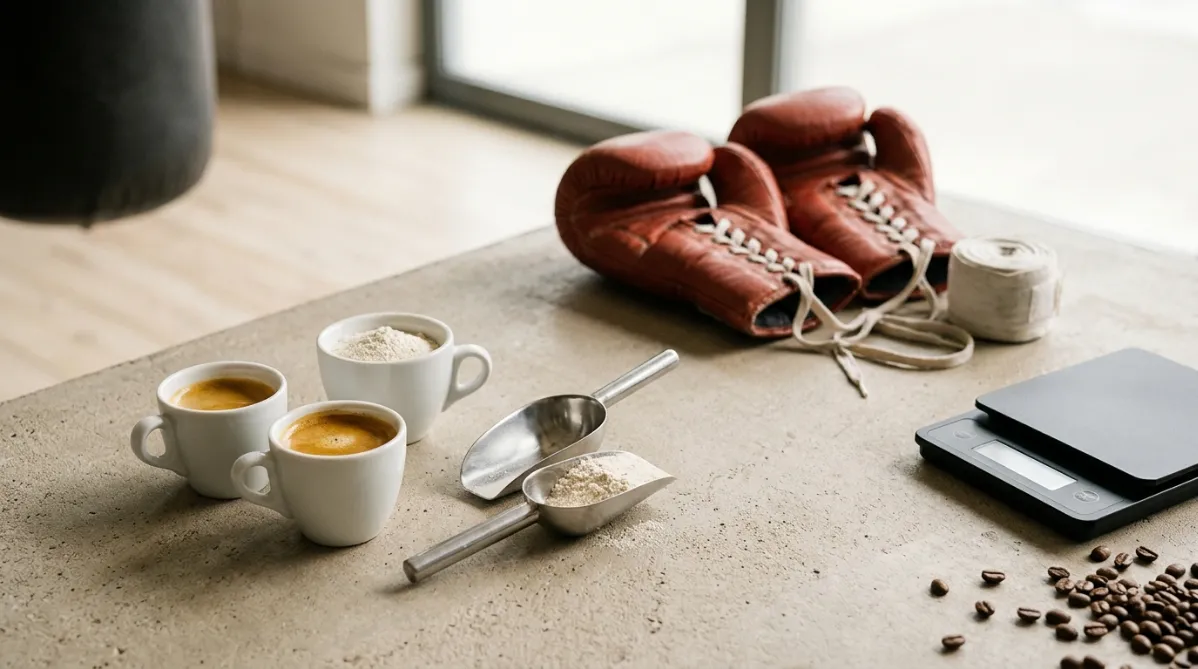
A landscape editorial photograph with a modern, clean magazine feel, shot on a pale warm-gray concrete surface in soft natural window light from the left. In the foreground, two matte white ceramic espresso cups sit side by side. The left cup holds a small amount of dark espresso with golden crema. The right cup is filled twice as high. Beside them, two small stainless steel scoops hold fine coffee-colored powder, one half full and one heaped, suggesting a dose comparison without any text or labels. A pair of worn red leather boxing gloves rests slightly out of focus behind the cups, laces loosely draped, with a white hand wrap rolled neatly beside them. A minimalist digital kitchen scale in matte black sits at the edge of the frame, with a few roasted coffee beans scattered across the surface. In the soft-focus background, a boxing gym corner appears: a hanging heavy bag in muted charcoal, pale wood plank flooring, and a tall window with diffused morning light. The palette is warm cream, espresso brown, brick red, and soft slate gray, with gentle shadows and a shallow depth of field. The composition follows the rule of thirds, with the cups and scoops in the lower left third and open negative space on the right for headline overlay. The look is tactile and refined, like a high-end health and performance journal. It has natural grain, subtle contrast, and a calm, confident mood. There are no people, no text, no logos, and no futuristic elements.
nutrition

Podwójna dawka kofeiny nie przyniosła bokserom większych korzyści – co jednak zadziałało

BY DR. GYMBRO ·

Myślisz, że podwójna porcja pre‑workoutu da podwójną moc? Badanie z 15 rywalizującymi bokserami porównało dawki 3 mg/kg i 6 mg/kg kofeiny. Większa dawka nie okazała się konsekwentnie lepsza – obie poprawiły wysokość skoku i moc po 60 minutach, a jedynie 6 mg/kg dało przewagę w kilku szczególnych testach, np. przy „ballistic push‑up” i momencie przy wyproście kolana. W artykule znajdziesz przeliczenie dawek na masę ciała, zalecaną porę przyjęcia oraz praktyczne uwagi.
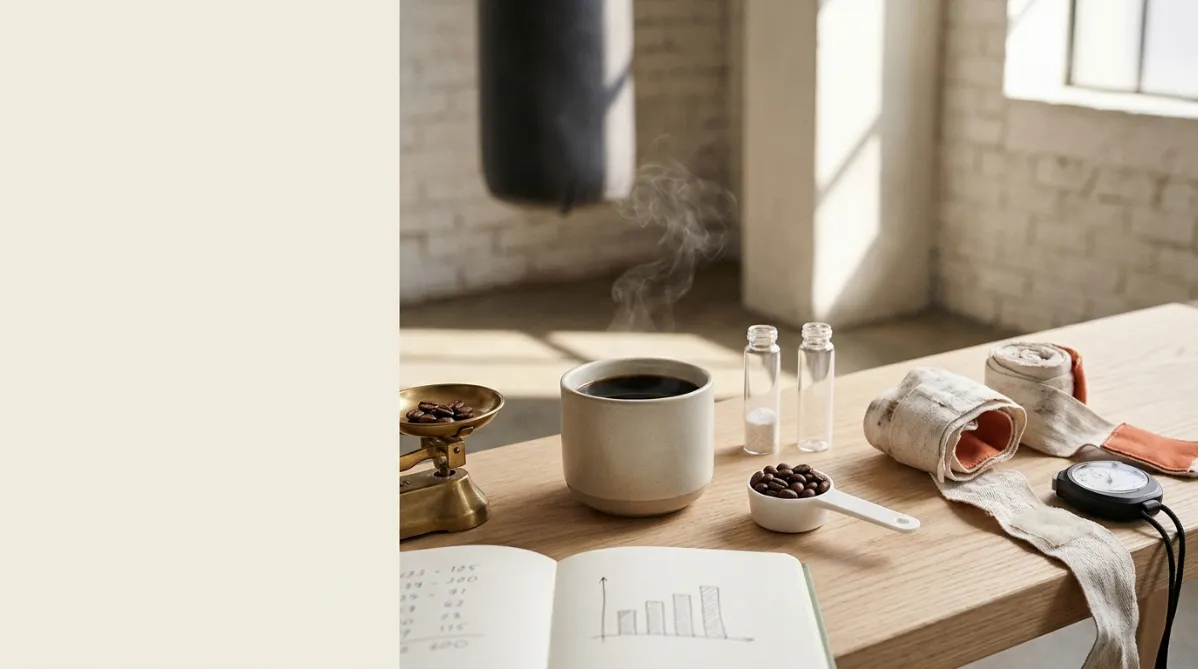
A wide, editorial-style still life shot from a slightly elevated angle on a pale oak gym bench, bathed in soft morning window light. In the center sits a matte ceramic cup of black coffee with delicate steam curling upward, flanked by a small white scoop of coffee beans and two identical glass vials, one filled with a few grains of fine powder and one empty, hinting at dose comparison. Next to the cup rests a pair of worn white boxing hand wraps, loosely coiled, and a slim black stopwatch with its face softly visible. In the foreground, a minimalist notebook lies open with blurred handwritten numbers and a simple pen sketch of a bar graph with bars of equal height, subtle and unreadable, suggesting a null result without any legible text. A small brass kitchen scale sits to the side with a few coffee beans on its tray.

In the soft-focus background, a boxing gym interior is visible: a hanging heavy bag in muted charcoal, exposed brick wall painted off-white, and tall windows casting long diagonal light across the floor. The color palette is warm and restrained: cream, sand, espresso brown, soft charcoal, with a single accent of muted terracotta orange in the hand wraps and a faint sage green in the notebook cover. Shallow depth of field with creamy bokeh, fine film grain, and gentle shadows give it a contemporary lifestyle-magazine and wellness-journal feel. The composition leaves generous negative space on the left third for headline overlay. Clean, calm, trendy, and tactile, with natural textures like wood grain, ceramic glaze, and cotton fabric. No people, no text, no futuristic elements.
science research

Kawa z niską dawką kofeiny nie zwiększyła prędkości sprintu u elitarnych zawodników

BY DR. GYMBRO ·

Myślisz, że kawa przed treningiem napędza twoje sprinty? Nowe, randomizowane i podwójnie zaślepione badanie z udziałem 15 zawodników sportów walki na szczeblu krajowym nie wykazało korzyści wydolnościowych przy dawkach kofeiny 1,5 mg/kg i 3 mg/kg (około 100 mg i 200 mg dla sportowca ważącego 68 kg). Szczytowa moc, średnia moc, wskaźnik zmęczenia oraz szacowane udziały systemów energetycznych nie różniły się od kawy bezkofeinowej. To jednak mały wynik zerowy, nie dowód, że kofeina nie działa – większość pozytywnych badań używa kapsułek w dawkach 3‑6 mg/kg. Poniżej znajdziesz wyliczenia dawek, ograniczenia badania i praktyczne wskazówki na kolejny trening.
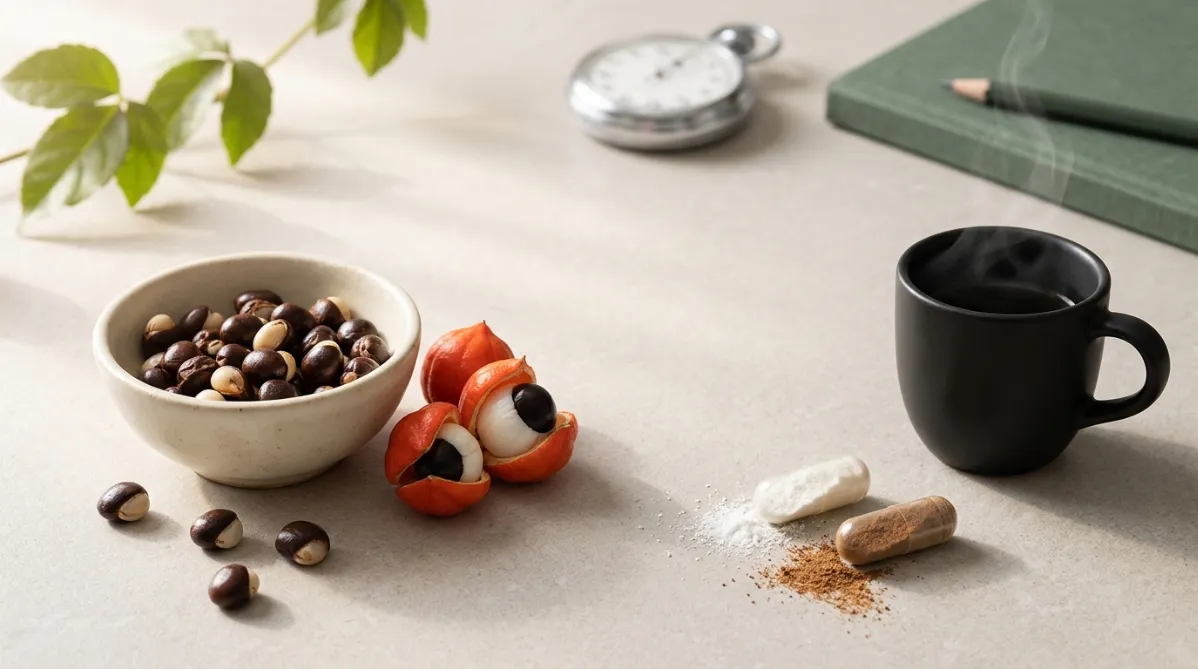
A wide, softly lit editorial flat-lay on a pale warm-gray stone countertop, shot from slightly above. On the left, a small rustic ceramic bowl in matte cream holds a handful of dried guarana seeds, dark glossy brown with pale cream arils, a few spilling onto the surface. Beside it sits a halved fresh guarana fruit in vivid red-orange, split open to show the white flesh and black seed inside, looking like a tiny eye. On the right, two open clear capsules rest side by side. One is filled with fine white caffeine powder, the other with a fine earthy brown guarana powder, and a little of each dusts the stone in delicate, deliberate lines. Between them, a minimalist matte-black espresso cup with a thin ribbon of steam rises on the right edge of the frame. A brushed-steel stopwatch and a slim dark-green linen notebook with a pencil sit in the upper background, slightly out of focus, to hint at performance testing without clutter. A few green leaves of a guarana vine curve in from the top-left corner, catching soft light.

The lighting is natural window light from the left, with gentle long shadows and a subtle warm highlight on the seeds. The palette is muted and modern: warm creams, terracotta red, deep espresso brown, sage green, and charcoal accents. The background is clean with generous negative space on the upper right for headline text. Shallow depth of field, crisp focus on the seeds and capsules, fine grain, and a calm premium magazine look like a contemporary wellness and sports-science journal. No people, no text, no logos, no futuristic elements.
science research

Guarana vs kofeina: przy tej samej dawce tylko guarana zwiększyła maksymalną moc

BY DR. GYMBRO ·

Ta sama dawka kofeiny, inna kapsułka – i jedynie guarana wywołała statystycznie istotny wzrost maksymalnej mocy. W randomizowanym badaniu typu crossover z 18 aktywnymi mężczyznami guarana zwiększyła maksymalny wydatek mocy o 4 % w porównaniu z placebo, podczas gdy kofeina bezwodna nie osiągnęła istotności. Jednak guarana nie przewyższyła kofeiny w bezpośrednim porównaniu, a różnice między nimi były jedynie opisowe. Poniżej znajdziesz, co mówią liczby, jakie są ograniczenia badania i jak dawkować guaranę w oparciu o zawartość kofeiny.
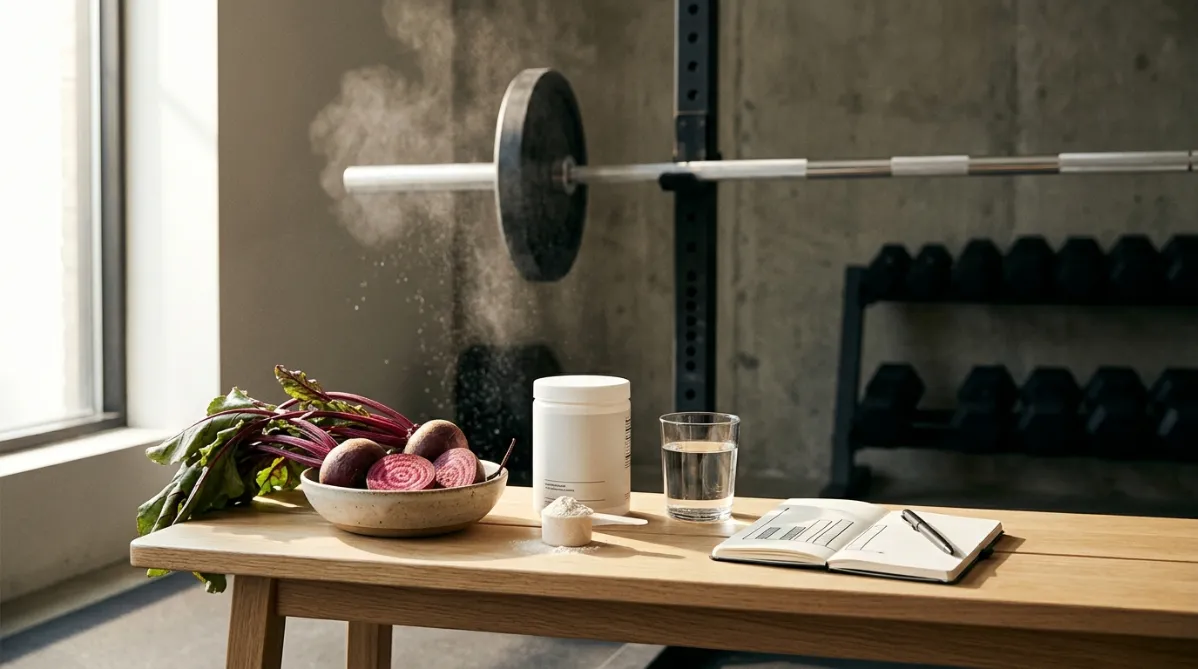
A sun-lit editorial still life on a pale oak gym bench: a loaded barbell rests on a rack just above it, chalk dust drifting in the air. In the foreground sits a small ceramic bowl of roasted beets, some sliced to show their deep magenta rings, with a few whole beets still wearing their leafy burgundy stems. Next to the bowl is a matte white supplement tub with a minimal label, a wooden scoop of fine white powder, and a clear glass of water catching soft highlights. A slim notebook lies open beside them with a simple hand-drawn bar graph and a pen, suggesting data and analysis without any readable text. Behind the bench, a softly blurred minimalist training space: raw concrete wall, tall window with warm morning light, a rack of black dumbbells fading into bokeh. The palette is earthy and modern: beet magenta, warm cream, charcoal, brushed steel, and touches of sage green from the beet leaves. Soft directional light from the left creates long gentle shadows and a slight film-grain texture. Shallow depth of field keeps the beets and powder tack sharp. The composition is wide and balanced, with negative space on the right for headline overlay. The overall feel is a clean, contemporary health and fitness journal photograph, warm and tactile, with an understated scientific tone.
nutrition

Betaina podniosła moc wyrzutu w wyciskaniu na ławce o około 16 % w 14 dni

BY DR. GYMBRO ·

Dwa tygodnie suplementacji betainą, związkiem występującym w burakach i sprzedawanym jako TMG, zwiększyły moc wyrzutu w wyciskaniu na ławce o około 16 % w pierwszym dniu intensywnego testu u mężczyzn trenujących siłowo. Randomizowane, podwójnie zaślepione badanie crossover wykazało także wyższą siłę izometryczną w wyciskaniu, przy mniejszych poprawach mocy skoku w pionie i sile izometrycznej przysiadów. Liczba powtórzeń i moc skoku przysiadu nie uległy zmianie, a grupa badana liczyła jedynie 12 mężczyzn. Oto, co pokazują dane, jaka była dawka i co podnosiciele powinni, a czego nie powinni wnioskować.
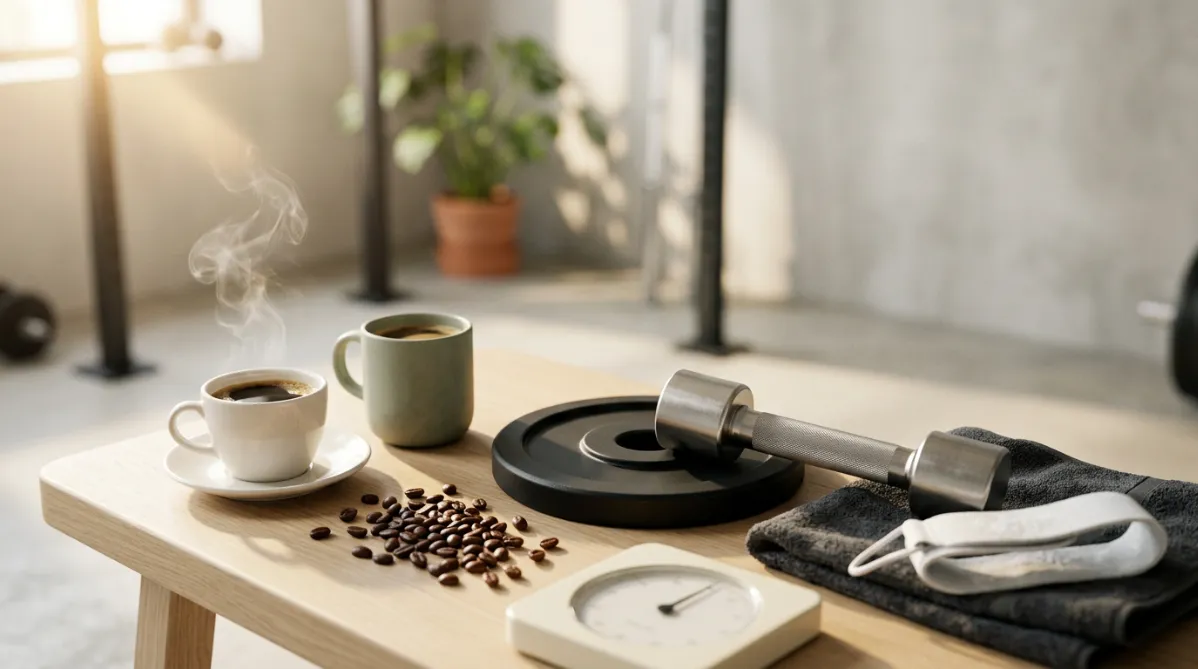
A wide, editorial-style flat lay photographed from slightly above on a pale oak gym bench with a soft matte finish. On the left, a small white ceramic cup of black coffee sits on a matching saucer, with a thin curl of steam rising and catching warm window light. Beside it is a second, slightly larger handleless stoneware mug in muted sage green, also filled with coffee, so the pair suggests one to two cups. In the center-right foreground rests a sleek matte-black steel barbell plate, partly overlapping a brushed-steel dumbbell with fine knurling. A folded charcoal gym towel and a clean white chalk-dusted wrist strap lie casually to one side. A small scatter of whole roasted coffee beans spills across the bench in front of the cups, glossy and deep brown. Near the bottom edge, a minimalist analog kitchen scale in soft cream with a thin black needle hints at precise dosing, without any readable numbers or text.

Soft morning sunlight streams in from the upper left, creating long, gentle shadows and a warm golden glow against cool neutral tones. The background is a softly blurred, airy home gym or boutique training studio with out-of-focus squat rack uprights, pale concrete walls, and a leafy green plant in a terracotta pot adding a touch of organic color. The palette is restrained and modern: warm cream, espresso brown, charcoal, sage green, and hints of brushed silver. Shallow depth of field keeps the cups and beans tack sharp while the background melts into creamy bokeh. The composition leaves generous negative space on the right third for a title overlay, with a balanced, calm, premium magazine feel, like a contemporary wellness and sports science journal. High-resolution, natural color grading, subtle film grain, realistic textures on ceramic, steel, and coffee crema.
nutrition

Ile kofeiny przed podnoszeniem? Meta‑analiza wskazuje, że 1–2 mg/kg nadal działa

BY DR. GYMBRO ·

Standardowa porada dotycząca kofeiny przed treningiem to 3–6 mg/kg, co może oznaczać kilka filiżanek kawy lub solidną porcję suplementu pre‑workoutu. Meta‑analiza z 2022 roku, obejmująca 12 badań, wykazała, że już dawki 0,9–2 mg/kg poprawiają siłę mięśni (d ≈ 0,17), wytrzymałość mięśniową (d ≈ 0,21) oraz średnią prędkość sztangi (d ≈ 0,56). Dla wielu podnoszących to mniej więcej jedna‑dwie filiżanki kawy. Efekty są skromne, a dowody pochodzą z jednorazowych, krótkotrwałych badań, ale wyniki sugerują, że podobną korzyść można osiągnąć przy mniejszej ilości kofeiny.
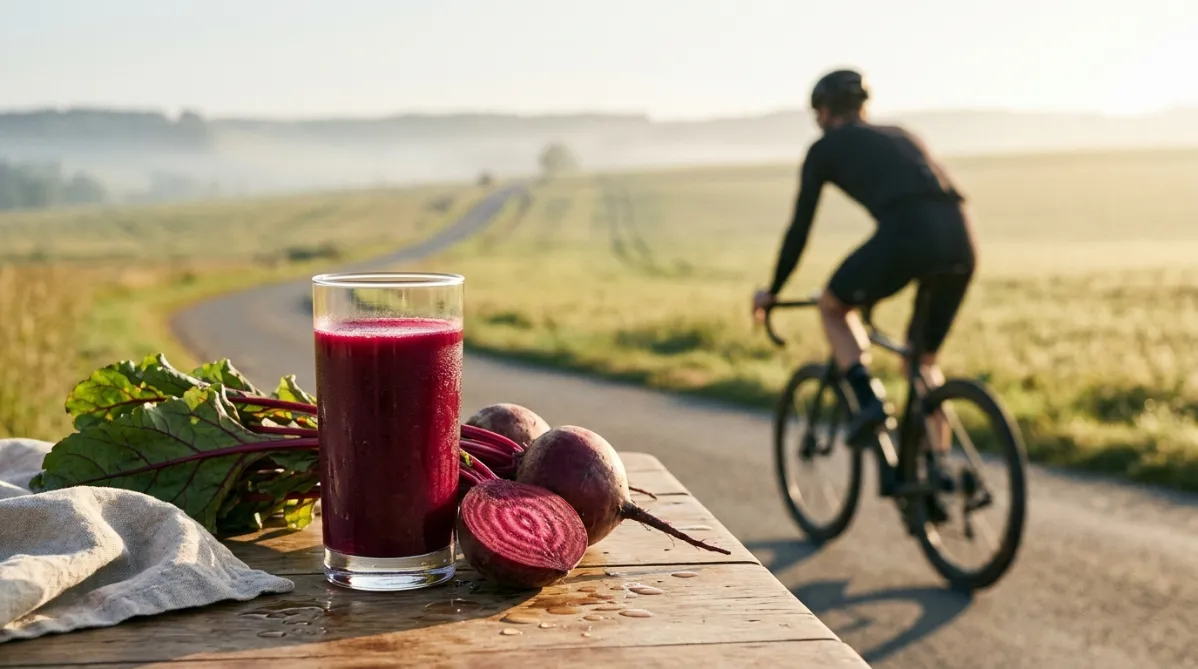
A cyclist in a fitted matte-black kit, shot from a low three-quarter angle, rides a sunlit country road at early morning, slightly out of focus with soft motion blur on the wheels. In the foreground on the left sits a rustic wooden table with a tall glass of deep magenta beetroot juice. Condensation beads on the glass, and the light catches its vivid jewel-toned color. Beside it lie two whole beetroots with their leafy red-veined greens still attached, and one halved beet shows concentric crimson-and-pink rings. A small linen napkin and a scatter of water droplets add an editorial still-life feel.

The background is a gently rolling landscape with golden-green fields and a thin ribbon of asphalt curving toward the horizon. Pale mist hangs low and warm sunlight comes from the right, creating long soft shadows and a golden rim light on the glass and the cyclist's silhouette. The shallow depth of field keeps the juice and beets crisp while the rider stays a dreamy blurred suggestion of speed.

The palette is rich magenta, burgundy, warm cream, sage green, and soft gold, with muted, slightly desaturated tones in the background so the beetroot color stands out. The composition follows the rule of thirds, with the still-life in the lower left third and open negative space in the upper right for the title. The overall look is a clean, modern lifestyle-magazine photograph with natural film-like grain, calm and athletic, and no text, logos, or futuristic elements.
nutrition

Sok z buraków przed testem czasowym: jak 0,5 L skrócił czasy jazdy na 4 km i 16,1 km o prawie 3 %

BY DR. GYMBRO ·

Małe, ale wpływowe badanie z 2011 roku sprawdziło, czy jednorazowy łyk soku z buraków może przyspieszyć prawdziwe testy czasowe na rowerze. Dziewięciu zawodowych kolarzy wypiło 0,5 L soku bogatego w azotany (ok. 6,2 mmol) około 2,5 godziny przed startem, co podwoiło stężenie nitrytu w osoczu, zwiększyło średnią moc i skróciło czasy na 4 km i 16,1 km o 2,8 % i 2,7 %. Jednocześnie zużycie tlenu (VO₂) pozostało niezmienione, co wskazuje na lepszą ekonomię jazdy, a nie na większą pojemność aerobową. Wyniki pokazują, że nawet niewielka poprawa może mieć duże znaczenie w sporcie rozstrzyganym sekundami.
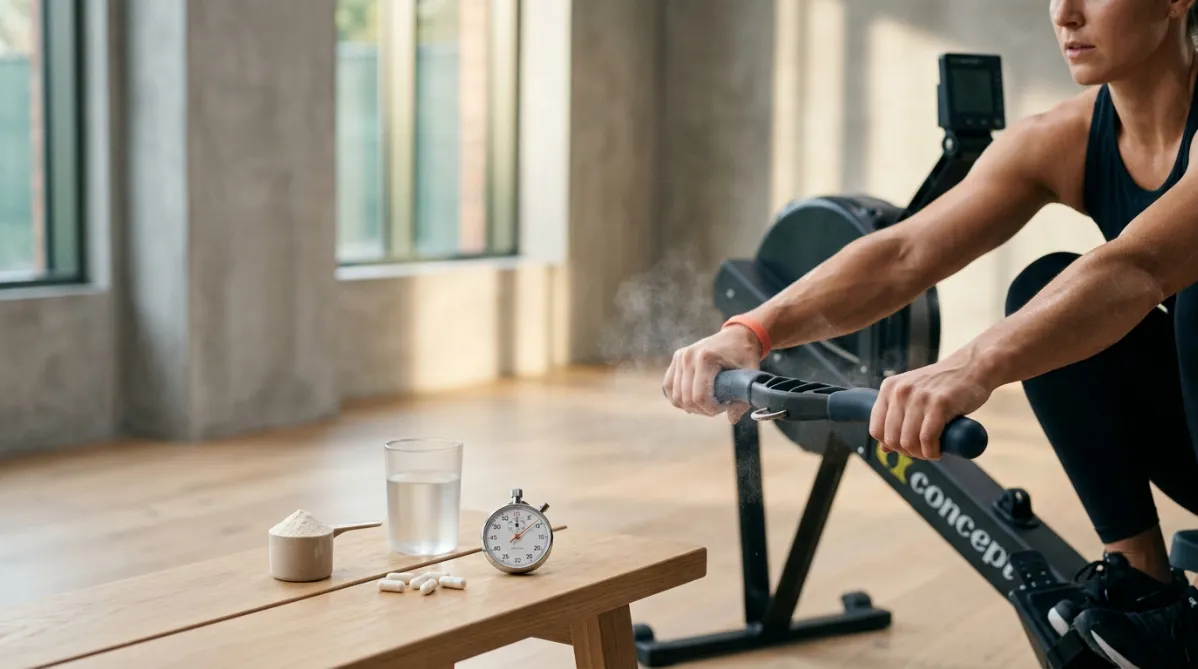
A wide, minimalist editorial scene of an athlete's hands and forearms gripping the handles of a rowing ergometer, shot in soft natural light from a large window in a clean, airy training studio. The athlete is mid-pull, forearm muscles subtly defined, a light sheen of sweat on the skin, chalk dust floating in the air. In the foreground on a pale oak bench sits a small ceramic scoop of fine white powder beside a matte glass of water, with a few loose white capsules arranged neatly in a gentle curve. A minimalist analog stopwatch with a clean white face lies next to them, its hand paused near the two-minute mark.

The color palette is calm and modern: warm off-white, soft sand, muted sage green, and a single accent of coral orange in the stopwatch hand and the rower's wristband. The background is softly blurred concrete and pale wood with long, gentle shadows stretching across the floor. Shallow depth of field keeps the hands, powder, and stopwatch crisp while the rest dissolves into creamy bokeh.

Composition follows the rule of thirds: the rowing handles and hands occupy the right third, the bench still life sits in the lower left, and open negative space in the upper left leaves room for a title overlay. The mood is focused, quiet, and intentional, like a high-end health and science journal feature. Fine film grain, subtle matte finish, editorial photography style, natural color grading, and no text or logos.
nutrition

Czy beta‑alanina działa? Metaanaliza potwierdza korzyści przy wysiłkach trwających od 60 do 240 sekund

BY DR. GYMBRO ·

Beta‑alanina od dawna jest reklamowana jako środek łagodzący pieczenie mięśni podczas intensywnego treningu, ale czy naprawdę działa? Metaanaliza obejmująca 15 badań i 360 uczestników wykazała rzeczywistą, choć umiarkowaną korzyść – średni przyrost wyniósł 2,85 %. Efekt był najbardziej widoczny przy wysiłkach trwających 60–240 sekund, mniejszy po czterech minutach i nie wystąpił przy sprintach krótszych niż minuta. Artykuł opisuje także powszechnie stosowaną strategię ładowania 3,2–6,4 g dziennie przez co najmniej cztery tygodnie, sposób podziału dawek zmniejszający mrowienie oraz grupy sportowców, które mogą zyskać najwięcej.

This page is available in